OHC Dubai renews partnership with Esaad Loyalty Program

The Osteopathic Health Centre have signed up with Esaad Loyalty Program for another year.

The Esaad Card is a loyalty program that offers exclusive privileges, discounts, and promotions to government employees under the General Directorate of Dubai Police. This program aims to strengthen Institutional Loyalty and improve quality of life, to promote employee happiness.

An Esaad card holder is eligible for a 20% discount on all Osteopathic Health Centre services. Esaad card holders and immediate family are eligible for the discount.

To learn more, contact us at 04 348 7366.
Lymphedema Management

As one of the leading clinics in Dubai that offers lymphatic drainage massage. We give you this guide that will help you to understand the importance of prevention, control and management of lymphedema in the maintenance phase.

What is the lymphatic system?

The lymphatic system is a network of tiny vessels and small, bean-shaped organs called lymph nodes. They work together to move a colorless, watery fluid called lymph from cells and tissues back into the circulatory system. The lymphatic system has many functions, the key ones being:

1.) Maintaining fluid levels in the body

2.) Protecting the body against foreign invaders (is part of the immune system)

3.) Transporting and removing waste products and abnormal cells

What is lymphedema?

In cancer patients, damage to the lymphatic pathways can be caused by the cancer itself, infection or certain treatments such as lymph node removal or radiation therapy. All these conditions can cause a lymphedema, which is the buildup of lymphatic fluid underneath the skin. The swelling can lead to pain, feeling of tightness, heaviness and recurrent skin infections. Lymphedema mostly affect the arms and legs but can also occur in the head and neck, the belly or the genitals. Sometimes lymphedema appear right after surgery or radiation and go away again quickly. In other cases, they develop months or even years later.

There are steps that can be taken to prevent a lymphedema from starting or to reduce and relieve symptoms:

Compression garments
A compression garment (sometimes called a compression sleeve) is a tight-fitting piece of elastic clothing that covers all or part of the arm. It works by putting pressure on your swollen arm and stopping the collection of lymph in any one area. Good compression garments are custom-made and should be replaced every 4 to 6 months or when they begin to lose their elasticity. You can wear the garment up to 24 hours, research shows that long-term and consistent wearing yields best results. It’s optimal to have 2 garments since they should be washed frequently. Your Physiotherapist will advise you where to get a custom-made compression garment.

Manual lymph drainage
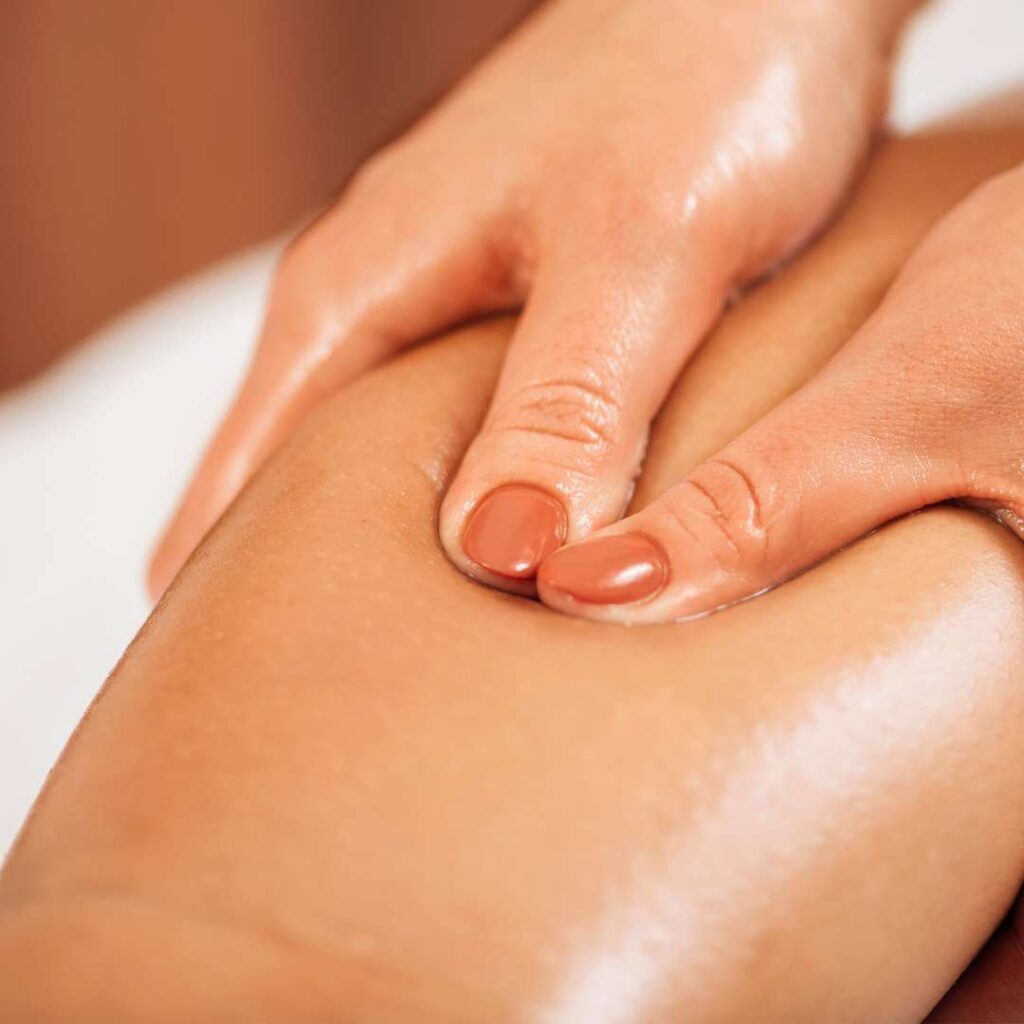
Manual lymph drainage massage is a technique performed by a trained physiotherapist. It’s a very light and gentle technique that helps the fluid drain from the affected area. You will be instructed certain massage movements by your therapist that you can perform at home to support the lymphatic system. Ideally a compression bandage or garment is applied right after the manual lymph drainage massage to avoid the lymph to return into the tissue.

Exercise
Daily activities as well as specific exercises and deep breathing are an essential part of a good lymphedema management. Activities involving many different muscle groups (such as walking or swimming) activate the circulatory system and help the lymph drainage. Since the lymphatic system depends on the muscles working as pumps, light exercises of the affected area are encouraged. Your physiotherapist will give you exercises appropriate to your needs.

Skin Care
Due to the reduced lymph flow the immune system is slightly depressed. It is therefore very important to avoid anything that could increase the risk of an infection. Disinfect little wounds immediately, prevent sunburns and other burns, wear gloves when doing gardening work, use a clean razor when shaving underarms, etc. Protect the skin in the affected area from drying and cracking by cleaning it daily, gently drying it well, and applying lotion with a pH of 5 to 5.5.

Lifestyle

  • Avoid any constriction, such as tight clothing or jewelry.
  • Carry your handbag or heavy packages with the unaffected arm.
  • Be cautious about exposing yourself to hot environments (saunas, steam baths, hot climate, etc.). Heat can make your lymphedema worse.
  • Diet and weight management. Eating a healthy diet and controlling body weight is an important part of treatment. Being overweight can contribute to the development of lymphedema and may make the use of compression garments less effective.
  • Eating less salt will help reducing fluid retention. Carbs may also cause extra water storing.
  • Resting the arm in an elevated position. Raising the arm above the level of the heart when possible lets gravity help drain the fluid.
  • If you have a compression garment you should wear it when traveling by air.
  • Ask for injections and blood pressure tests to be done on the unaffected arm.
  • Avoid vigorous, repetitive movements against resistance, such as scrubbing, pulling, or pushing with the affected arm.

Make these precautions part of your daily habits and plan to follow them for the rest of your life. Compare your hands and arms regularly. Look at them in the mirror. Learn what’s normal for you so you can detect changes right away. If you notice any worsening of symptoms, see your healthcare provider as soon as possible.

Manage & prevent pain with our weekly therapeutic Pilates classes

“If your spine is inflexibly stiff at 30, you are old; if it is completely flexible at 60, you are young.”  -J. Pilates

Would you like to move with greater ease & efficiency, be more active, and less prone to injury? Do you suffer from poor posture? Back pain? A knee or ankle injury? Want to improve strength? Repair & recover pelvic floor post-pregnancy? 

Our weekly therapeutic Pilates classes focus on posture, core strengthening, balance, breathing, flexibility and a fascial release approach.  Class size is small so that exercises are specific to individual needs, and the main goal is to help activate targeted muscles for a safe return to optimal physical capacity.

In the sessions you will learn & develop the ‘the Basic 10’ Classical Pilates moves and healthy tips to help you:

  • strengthen the deep abdominal and spinal muscles 
  • alleviate back/joint pain
  • create space in the joints and spine especially to help avoid compression of the spine
  • develop postural awareness & understand the correct hip pelvic alignment for natural healthy movement
  • open the chest and strengthen the upper back to help ease pain in the shoulders and neck
  • deep and healthy Pilates breathing to increase lung capacity and effective oxygen circulation
  • Increased stability in ankle joints and foot arches, and thereby increased stability and alignment of knee joints 

Start your mornings feeling stronger, calmer and walking a little taller in these weekly classes that are energising, fun, safe and healing.

At OHC, we offer both Pilates classes and one-on-one sessions with our partners at Phoenix Rising. 

Classes take place Wednesdays 8:45-9:45am (9am-10am during Ramadan), private one-on-one sessions by appointment.

For more information, contact Kirsty: kirsty@phoenix-rising.me

Mobile: 050-4298148 or book by calling OHC on 04-3487366

Website: www.phoenixrising.ae

Ramadan & Eid promotion: bring along a friend to Wednesday Pilates class for free. Pay AED85 only for one person when 2 friends attend. Valid to 12th June only.

The Elephant Club: TMD, Bell’s Palsy and Cervicogenic headaches

Elephant Club Tuesday 26th February 2019. 

Focus: TMD, Bell’s Palsy and Cervicogenic headaches 

Participants to this meeting were invited to attend. 

The meeting took place at the Osteopathic health Centre from 7:00pm to 9:00pm. 

There were several practitioners present including osteopaths, a homeopath/ health coach, a TCM practitioner and a psychologist/ exercise physiologist. each giving their own perspective on the treatment of the conditions mentioned above. It became obvious by the end of the evening that despite the different approaches from osteopathic practitioners and TCM practitioners, the result would be beneficial to the patient. 

It was agreed that for patients suffering from Bell’s Palsy, early intervention was best, and that a combined approach of osteopathy with acupuncture could work well. 

Discussion points: Is traditional allopathic medicine becoming increasingly holistic in its approach? 

This is a monthly event for healthcare practitioners working in UAE. If you would like to join future events, please send an email on: anissa@108.160.159.203

Cholesterol and Diet

What is Cholesterol?

Cholesterol is a waxy, fat-like substance found in the walls of cells in all parts of the body, from the nervous system to the liver to the heart. The body uses cholesterol to make hormones, bile acids, vitamin D, and other substances.  

The body makes all the cholesterol it needs. Cholesterol circulates in the bloodstream but cannot travel by itself. As with oil and water, cholesterol (which is fatty) and blood (which is watery) do not mix. So cholesterol travels in packages called lipoproteins, which have fat (lipid) inside and protein outside. 

The two main types of Lipoproteins are:  
■ Low density lipoprotein, or LDL, which also is called the “bad” cholesterol because it carries cholesterol to tissues, including the arteries. Most of the cholesterol in the blood is in LDL form. The higher the level of LDL cholesterol in the blood, the greater your risk for heart disease.  

■ High density lipoprotein, or HDL, which also is called the “good” cholesterol because it takes cholesterol from tissues to the liver, which removes it from the body. A low level of HDL cholesterol increases your risk for heart disease.

Risk Factors – There are certain modifiable and non- modifiable risk factors:  

• Age, sex, family history, ethnicity, genetic susceptibility are all non modifiable.  
• Diet, smoking, high blood pressure, excess weight, physical acidity and blood glucose are modifiable.

Types of Fats  

  • Saturated fat
  • Unsaturated fats 
  • Trans fat 
  • Cholesterol 

Diets with too much saturated fat, trans fat, and cholesterol are the main cause for high levels of blood cholesterol . 

Excess weight tends to raise your LDL level and triglycerides. Losing the extra pounds may help lower your LDL and triglycerides, while raising your HDL.

Triglycerides, which are produced in the liver, are another type of fat found in the blood and in food. Causes of raised triglycerides are obesity, physical inactivity, cigarette smoking, excess alcohol intake, and a diet very high in carbohydrates(60 percent of calories or higher).  

Recent research indicates that triglyceride levels that are borderline high (150–199 mg/dL), high (200–499 mg/dL) may increase your risk for heart disease.

Food Sources – Healthful Tips

  • Limit saturated fats under 7% of your total calorie intake and keep trans-fat intake to 0. 
  • Trim the skin and fat from your poultry and meat and limit food items rich in cholesterol, e.g. eggs yolks, shrimps, etc. Steam, grill, poach, broil or grill your food.
  • Increase soluble fibres like oat bran, barley, kidney beans, fruits such as apple, pear with skin etc. 
  • Choose olive oil spreads and other heart healthy oils for routine consumption. 
  • Have oily fish at least twice a week.
  • Be mindful during snack times, and choose from natural options like veggie sticks, fibre rich oats or fruits. 
  • Include healthy legumes and pulses in your meals. 
  • Have planned meal times, with smaller portion of meals.  
  • Choose whole grain whole food concept for your plate.  
  • Add natural plant sterols like wheat bran, almonds, olive oil etc. to your diet.  
  • Other therapeutic items beneficial for cholesterol management are apple cider vinegar, green tea and garlic. 
  • Quit smoking .

Fibres

  • Research shows that adding soluble fibres to your diet reduces your LDL cholesterol.
  • 8 to 10 grams of soluble fibres daily can contribute towards improving LDL levels.  
  • Please increase the fibres gradually, and start on small amounts since a large amount can result in bloating and gas.
  • Make sure to be well hydrated to support the functions of the soluble fibres.
  • Examples of foods high in soluble fibre: oat bran, barley, oatmeal, banana, pear, apple, orange, grapefruit, peach, black beans, navy beans, kidney beans, broccoli, etc.  

To learn more, please contact our homeopath Dr Priyanka Sainani


What is Manual Physical Therapy?

Manual orthopaedic physical therapy is a clinical approach to addressing joint, muscle and nerve tissues that restrict movement, perpetuate pain, and/or limit the functional potential of a person. It is the skilled, reasoned application of specific hands-on techniques to address dysfunctional tissues to modulate pain, restore movement, and improve function.

Manual physical therapists (PTs) are direct access providers, meaning they have the knowledge to rule in and out various orthopaedic conditions and reach a clinical diagnosis for a condition. Beyond just diagnosing the problem, a manual PT will systematically observe and test your alignment, movement, muscle balance and joint mobility, to understand why the problem developed. Based on these findings, the therapist will then create a treatment plan to target the identified dysfunctions. They will educate you on how to manage your issue, and plan with you for a progressive return to the activities that you love.

How Physical Therapy is it different?

Orthopaedic manual physical therapists have a strong foundational knowledge of biomechanics (how joints and muscles move the body in space) and how limitation in one area can compound dysfunction in another. They use hands-on techniques to address these dysfunctions, and to facilitate specific muscle coordination and control to restore normal movement to dysfunctional areas. Exercises are prescribed based on the individual, instead of a one-size fits all approach. Insofar as possible, the treatments applied are informed by current research.

What does the research show about Physical Therapy?

There is a growing body of research demonstrating orthopaedic manual physical therapy is as effective as surgery in the management of many conditions. These include:

  1. Sciatica: A study published in the British Medical Journal reports that patients undergoing spinal surgery for sciatica had short term benefit, but by 6 months following surgery, they had no significant difference in pain relative to patients with sciatica receiving physical therapy. (Peul WC et al. BMJ 2008; 336(7657):1355-8)
  2. Neck pain with arm pain: when cervical fusion surgery was compared to physical therapy, researchers concluded that there were no significant differences between the two treatments, prompting the researchers to suggest that “a structured physiotherapy programme should proceed a decision for ACDF (surgery).” (Peolssona et al, Spine 2013 15:38(4):300-7)
  3. Shoulder pain: In patients with rotator cuff tears, patients who underwent physical therapy had the same clinical improvements in pain and function as those who underwent surgery. (Ryosa et al, Disabil Rehabil 2017 39(14) 1357-1363)
  4. Knee pain: Dr. Reed Siemieniuk, heading an expert panel on management of knee pain, concluded that “physical therapy and other management strategies should be utilised for knee pain due to osteoarthritis, NOT arthroscopic surgery.”

Try physiotherapy first! The sooner the better, as this changes outcomes. It is a quicker, cheaper and less painful alternative to surgery for many conditions, including back pain, neck pain, knee pain and rotator cuff tear.

Homeopathic Treatment for Headaches

By Dr Priyanka Sainani

Headaches, or excruciating pain in the head, can be quite debilitating and result in poor quality of life. Taking the support of homeopathy or natural medications often helps treat the pain in the gentlest possible way.

Headaches are broadly classified as Cluster Headaches, Stress Headaches, Tension Headaches and Migraines. Homeopathic treatment can be helpful with acute management and preventive management of headaches.

In homeopathy, the factors which are taken into consideration for effective treatment are:

  • the character of the pain, e.g. throbbing, bursting type of pain;
  • the location, e.g. forehead, temples, back of the head;
  • associated complaints, such as poor appetite, nausea, bloating, giddiness and so on; and
  • underlying complaints, e.g. hypertension, sinusitis, insomnia, undue stress, previous trauma etc.

Other factors taken into account during the treatment are the typical causes or triggers for the headaches, such as heat, skipped meals, sleep cycle, swimming in the pool, etc.

The treatment involves a long case history, where the homeopath will spend time with you to understand your lifestyle, eating habits, stress levels and emotional health. As a part of the treatment plan you will get natural and safe homeopathic medicine along with the support of nutritional counselling to help you holistically.

Nutritional counselling would help improve your mindfulness towards your eating behaviour and food choices suitable to your given health conditions and add certain foods with therapeutic benefits to manage an underlying ailment.

The Elephant Club

This is a monthly networking event for healthcare practitioners working in the UAE.

It was inspired by a teaching story from India: six blind men had heard about an elephant but wanted to experience for themselves what the elephant was.

Each man felt a different part of the elephant and came to his own conclusion. The man holding and pulling the elephant’s tail thought it was a rope. One man held the elephant’s leg and likened it to a tree trunk. Another leaned against the elephant’s side and thought it was like a wall. Yet another likened the ears to the leaves of a banana tree. The man handling the elephant’s trunk leapt back in fear, claiming the elephant felt like a serpent. All the men had a perspective of the whole elephant, but the elephant as you know is the sum of all those parts.

Likewise, in healthcare, each practitioner has their own perspective on a particular condition, but there are other perspectives that may assist the patient’s healing process. How can we know unless we meet other practitioners and learn about the scope of their work?

To register your interest in attending our events, please send an email to info@108.160.159.203

Holiday Health Tips

Many of us derail ourselves from our normal routine during the holiday season, so here are a few tips by our homeopath, Dr Priyanka Sainani, to follow a week before the period of indulgence begins!

  • Boost immunity and metabolism: antioxidants like Vitamin C, Vitamin E, Selenium and Zinc will help exhaust calories during the time of festive dining; a glass of warm water with some lime, in the mornings, can also be helpful
  • Go LEAN: avoid saturated fats for 7 days
  • Avoid SUGAR: avoid added sugar and refined carbohydrates for a week to give your body a sense of balance
  • Fast: for a few hours in a day to balance energy levels and give the digestive system some rest (keep in mind fasting does not mean starving)
  • Keep hydrated: drink 8 to 12 glasses of water to flush out all the toxins
  • Sweat it out: daily for 30 minutes by choosing any physical activity, as per your convenience and health condition
  • Fix digestion: by having natural probiotics with your meals, chewing food well, eating slowly and mindfully

For any specific queries, please call 04 3487366 or send an email on info@108.160.159.203

How Physiotherapy can help with Cervicogenic Headaches

Many of us quietly suffer with headaches, taking a pill in order to get on with our day.  For a subset of people, their headache is actually coming from their neck; treating the neck then results in a significant decrease in headache pain, intensity and frequency.

A classic example is the headache that starts at the back of the head, and then radiates to the forehead or eye; these are generally one sided and can present similar to migraines even though the cause is actually in the joints, muscles and nerves of the upper neck.   Headaches that feel like a gripping or pressing tightness through the entire forehead and temple area are also examples of headaches driven by the neck. When we choose to medicate our way out of a headache, especially if we’re taking medication twice a week or more, we can actually develop rebound headaches, leaving us with even more frequent headaches!

Is physiotherapy effective for rebound headaches?


If the cause is in the neck, then you must treat the neck! This is where a functional manual therapy approach comes in. A qualified physio will fully assess the root cause of the headache. If the problem is in the joints of the neck, the physiotherapist will restore natural motion and alignment of those joints. Through a combination of releasing tight and painful muscles and specifically retraining the correct postural muscles of the neck, a physio will help you to alleviate the pain generators driving the headache! Current research continues to demonstrate that this approach is effective for a large proportion of patients with a headache.

A quick checklist to help you start troubleshooting the cause of your headaches:

  1. Do you awaken with headaches? If so, the position that you are sleeping in may be putting too much strain on the neck…. this is especially true for individuals who sleep on the belly. Changing your sleep position and properly supporting the neck will often help immensely.
  2. Do you tend to get headaches after you’ve been at work for sometime? In this case, the posture that you’re in may be contributing to overuse of some of the muscles of the neck.  When these muscles become stiff and tight or even develop knots, the ensuing pain can be felt in the head. Changing the posture and strengthening the proper muscles will diminish headaches.
  3. Did your headaches develop after an injury to the head or neck?  Even a simple rear-end collision that you thought nothing of at the time can essentially “shut off” the stabilizing muscle of the neck.  More significant car accidents or falls can essentially jam up the joints of the neck and create continued headaches if not addressed.

If you find yourself continually reaching into the medicine cabinet to address your headaches, you are likely just perpetuating the cycle as opposed to heeding the warning signals of your body.  A qualified physiotherapist will help you identify the root cause of your headache, treat the joints and muscles that are creating your pain, and show you how to break the habits that have contributed to your headaches.

By Dr Katherine Kulp