
The Connection Between Vertigo and TMJ

What is TMJ?

The temporomandibular joint (TMJ) connects the jaw to the skull on either side of the face. When it functions incorrectly, it can lead to an array of complications, including:

  • Pain
  • Swelling
  • Face tenderness
  • Clicking, popping, or grating sound when opening or closing the mouth
  • In some cases, the jaw may become stuck in an opened or closed position
  • Pain in the neck
  • Ringing in the ears
  • AND even vertigo.

TMJ is treated here at the Osteopathic Health Centre, Dubai.

What is Vertigo and How is it Connected to TMJ Condition?

Vertigo is described as a sensation that your surroundings are moving. Often, you will feel as though you are spinning, whirling, or moving in either a horizontal or vertical position. During these, there may be involuntary eye movements, hearing loss, and nausea.

Vertigo is often caused by an inner ear issue. However, a TMJ condition can also lead to what’s known at TMJ dizziness. The feeling of dizziness can often give patients a fear of falling. It may lead to a slip or fall, thereby not only resulting in injuries but also a phobia of going out in public places. It can have a big impact on day-to-day life.

The TMJ joint has a very close relation to the inner ear. The Labyrinth is found in the temporal bone at the head region of the human body. The TMJ is also attached to this temporal bone and skull. The Labyrinth plays an important role in the body’s balance and vestibular system (eyes, nerves, joints and bones). A disruption in any part of the vestibular system sends wrong signals to the brain which results in TMJ dizziness or vertigo.

How can Osteopathy help?

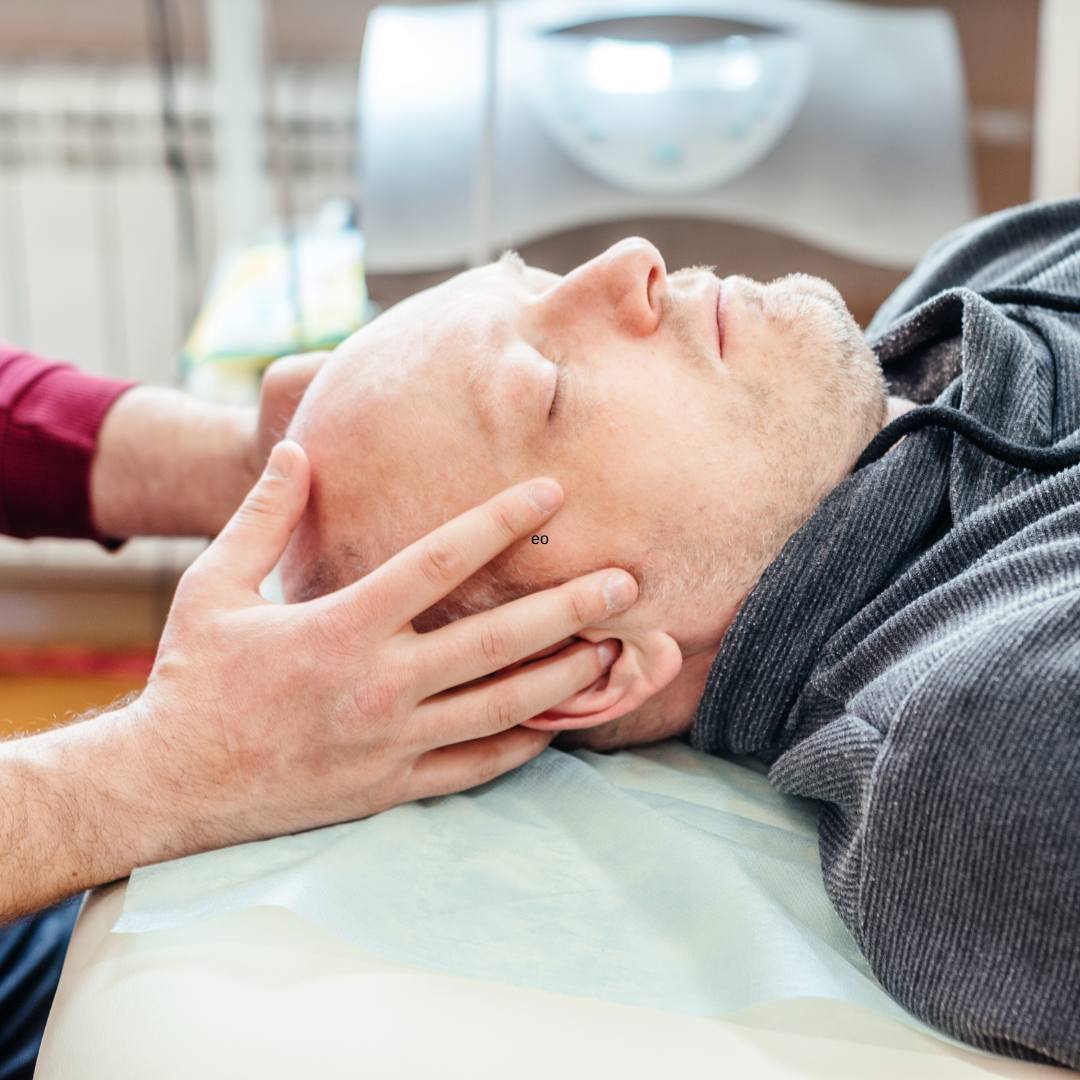
An osteopathic approach to treating TMJ dysfunction includes a thorough assessment of the head, jaw, neck, shoulders and mid-back. Due to the proximity of the jaw and neck, you rarely get dysfunction in one without the other.

Osteopaths can relieve the tightness in the soft tissue structures around the TMJ and other structures in the neck and head where the muscles of the jaw attach.

Treatment may involve:

  • Soft tissue to the muscles surrounding the jaw
  • Joint articulation to improve movement and biomechanics of the joint
  • Dry needling to aid capsular pain and help ease arthritic pain
  • Posture correction – to address any underlying biomechanics that may be contributing to jaw pain
  • A combination of intra-oral and external techniques
  • muscle energy techniques and isometric exercises
  • Education into preventative methods such as exercises to improve posture and breathing and mindfulness advice to help manage stress
  • Referral to other healthcare professionals in instances where dental care or a mouth guard are required
  • Follow up exercises are prescribed to do at home for maintenance

Osteopathy Treatment is Not Just About Cracking & Manipulation

Osteopathy treatment is a hands-on approach to healthcare that focuses on the body’s structure and function. Osteopaths believe that the body’s systems are interconnected and that the body has self-healing mechanisms. Through manual techniques like stretching, gentle pressure, and manipulation, osteopathic physicians aim to alleviate pain, improve mobility, and enhance overall wellness. By restoring balance within the body, osteopathic treatment promotes healing and supports the body’s natural ability to heal itself.

We asked osteopath Youssef Youssef about his treatment approach. “I follow the five principles of osteopathic treatment when treating patients. There is no particular order for using the five 5 principles of Osteopathy however, they always apply to all patients: (pain in pregnancy, sports injuries, low back pain, headaches, TMJ pain and clicking jaw, neck pain and posture)”.


What are the 5 principals of Osteopathy Treatment?

An osteopath sees the body as a whole unit. Any dysfunction in one part of the body can contribute to compensations in other parts of the body. An osteopath will create a treatment plan to address the original dysfunction as well as all compensations.

Osteopathy is a principle-based practice when it comes to finding and treating a dysfunction (pain, discomfort, weakness etc) in the body.

The body can heal itself.

Movement is important to healing.

Structure and Function are interrelated.

The body is one unit.

The artery is supreme


The body is able to heal itself.

The most relatable examples are:

When your body heals a cut on your skin

When your body become immune after a virus infection

When bone grows back after a fracture

Osteopathy helps assist your body’s natural healing process by bring movement back to all parts in the body such as muscle, fascia, joints and this creates ease in circulation of all fluids in the body.

Movement is important to healing.

Our entire life is based on movement, without it we have dysfunction. Many spend 7-8 hours a day sitting and have complaints of headache, neck and low back pain and many other dysfunctions; this is due to the lack of movement in their day-to-day life.  Movement stimulates circulation of all fluids in the body that need to provide nutrition to your muscles and joints.

Structure and Function are interrelated.

This is a principle that helps all Osteopaths understand what is happening in your body just through its structure (Posture, muscle tone, which parts of the body are not moving, skin texture etc). Your structure is an expression of how you as an individual function in movement and in general health.

The body is one unit.

The body works as one unit, everything is connected to everything else, and you cannot have one area of the body in dysfunction without another being affected.
Your bones are connected through joints, and those joints move via muscles.  So, if one area of the body is in dysfunction it will influence the normal movement and function of the entire body.

The artery is supreme

Arteries supply everything in the body with oxygen and nutrients in order for them to function and survive. If there is a disturbance in this the body does not function optimally and its ability to heal is reduced.

Osteopathic treatment starts with assessing the structure of the body and its movement, we look for areas that have dysfunction in that movement and correlate it with the rest of the body and restore it with manual osteopathic treatment. Restoring the movement of the structures in dysfunction allow for optimal circulation of fluids and healing of the body.  I have been treating patients in Dubai for seven years, using all these principles with success.


With a world class team of osteopaths and years and years of collective experience and knowledge, Osteopathic Health Centre has been a household name in Dubai and the Middle East when it comes to osteopathy. Call us at 04 348 7366 or email info@osteopathydubai.com to book an appointment. We can help!

Conquer Vertigo and Dizziness with Osteopathy

Regain Your Balance

Vertigo and dizziness can be incredibly disruptive, robbing individuals of their independence and freedom. The constant fear of losing balance and the inability to enjoy everyday activities can take a toll on one’s physical and emotional well-being. Fortunately, there is a solution that goes beyond temporary relief. In this article, we will explore how osteopathy, a holistic approach to healthcare, can help individuals find lasting relief from vertigo and dizziness.

Understanding Vertigo and Dizziness

Vertigo is a specific type of dizziness characterized by a sensation of spinning or whirling. It is often accompanied by nausea, loss of balance, and difficulty concentrating. Dizziness, on the other hand, refers to a general feeling of lightheadedness or unsteadiness. Both conditions can stem from various underlying causes, including inner ear problems, migraines, neck or head injuries, or issues with the central nervous system.

The Limitations of Conventional Approaches

Conventional treatments for vertigo and dizziness often focus on managing the symptoms rather than addressing the root cause. Medications may provide temporary relief but fail to provide a long-term solution. This is where osteopathy stands out.

Osteopathy: A Holistic Approach

Malcolm Gregory – A Senior Osteopath and the Co-Founder of Osteopathic Health Centre in Dubai, UAE

Osteopathy takes a holistic view of the body, recognizing that all systems are interconnected and work together to maintain balance and health. Osteopaths understand that vertigo and dizziness can result from various factors, including musculoskeletal imbalances, restricted blood flow, or nerve dysfunction. By considering the entire body and its complex relationships, osteopathy aims to restore optimal function and provide lasting relief.

Personalized Treatment Plans for Lasting Results: One of the key advantages of osteopathy is the personalized approach to treatment. Osteopaths assess each individual’s unique situation, taking into account their medical history, lifestyle, and specific symptoms. This comprehensive evaluation allows them to develop a tailored treatment plan that addresses the underlying causes of vertigo and dizziness. By targeting the root issues, osteopathy can provide long-lasting results.

Gentle Techniques for Restoration: Osteopaths employ gentle manual techniques to restore balance and function to the body. These techniques may include soft tissue manipulation, joint mobilization, and cranial techniques. By alleviating tension, improving circulation, and enhancing the function of the nervous system, osteopathy aims to reduce the frequency and severity of vertigo episodes.

Empowering Self-Care: Osteopathy goes beyond in-office treatments. Osteopaths empower individuals with self-care strategies that they can incorporate into their daily routine. These may include specific exercises and stretches, postural adjustments, and stress management techniques. By actively participating in their own recovery, individuals can maintain long-term well-being and reduce the risk of recurring vertigo and dizziness.

Embrace a Life Without Limits: Imagine waking up each morning with a renewed sense of balance and confidence. Envision participating in activities you love without the fear of falling or the debilitating effects of vertigo. Osteopathy offers a path to freedom, enabling individuals to embrace life to the fullest. By addressing the root causes of vertigo and dizziness, osteopathy provides an opportunity to regain control over one’s body, mind, and spirit.

Conclusion

If you are tired of living with the limitations imposed by vertigo and dizziness, it’s time to explore the transformative power of osteopathy. By taking a holistic approach and addressing the underlying causes, osteopathy can provide long-lasting relief and restore your quality of life. Don’t let vertigo control your life any longer. Take the first step towards freedom by consulting with an experienced osteopath. Embrace a future filled with balance, confidence, and joy—because you deserve it!

Further Readings:

Dubai Eye 103.8 Interview with Zameena Gull

We had the opportunity to discuss the impact of osteopathy on our day-to-day lives during this interview. Osteopathy, a holistic approach to healthcare, focuses on the body’s structure and its role in overall well-being.

We delved into how osteopathy can significantly improve our quality of life by addressing a wide range of conditions and concerns. From enhancing sitting posture to chronic pain management, osteopathy offers a unique perspective that considers the interconnectedness of the body’s systems.

Breaking Barriers: Osteopathy for Parkinson’s

Written by: Zarmeena Gull (Osteopath at OHC)

Osteopathy Restores Stability in Parkinson’s Patients

Parkinson’s Disease (PD) is a neurodegenerative disorder that affects movement, muscle control, and balance. While there is no cure for Parkinson’s, there are various treatment options available to help manage symptoms and improve quality of life. Tremor, slowed movements, and rigidity are physical symptoms which contribute to postural and gait abnormalities seen in many PD patients. Other symptoms include loss of balance and restricted range of motion, increasing the risk of falling.

Osteopathic manual treatment provided by osteopathic physician’s aims to help decrease muscle spasms and improve joint range of motion and movement.

Osteopathic Treatments Show Promise for Parkinson’s Patients

There have been studies investigating the effect of Osteopathic treatments on PD patients. One previous research study demonstrated that a single session of osteopathic manipulative improved, particularly stride length, cadence, and maximum velocities of upper and lower extremities.

Eight other studies on non-PD subjects have shown that Osteopathic treatment can improve subject balance. In a recent study 20 elderly subjects with Osteopathic treatment applied weekly for four weeks showed an improvement in postural instability and dizziness.

Osteopathic treatment could be utilized in improving gait in PD patients, improve muscle hypertonicity and joint motion restrictions by using muscle energy and articulatory techniques for the spine and the extremities. Some specific Osteopathic techniques could be used to address balance of the spine and cranium.

My Personal Experience as an Osteopath Treating Parkinson’s Patients

Based on my experience of treating PD patients and the improvement of symptoms in I have developed a specific protocol to help my patients. I use the cranial CV4 technique, to help  address cranial restrictions, thus aiming to affect patient’s autonomic function. The protocol then proceeds to address each major spinal region and the extremities by decreasing muscle hypertonicity and increasing joint range of motion with direct Osteopathic articulatory and muscle energy techniques.

Secondly, osteopathy can improve circulation and lymphatic drainage, which can help to reduce inflammation and promote healing. This can be particularly helpful for Parkinson’s patients who may experience swelling or inflammation in the affected areas.

Finally, osteopathy can help to promote relaxation and reduce stress. Parkinson’s can be a very stressful condition, and stress can exacerbate symptoms.

Here is a recent message from one of my PD patients who is finding osteopathic treatment very helpful. It is a pleasure to receive messages like these; it really does make my Day!

Further Readings:

Osteopath vs Chiropractor: Who Should You Go to for Treatment?

Demystifying Osteopath vs Chiropractor (Osteopathy vs Chiropractic)

In the realm of alternative medicine, two captivating practices have captured the attention of seekers of holistic health: chiropractors and osteopaths. These therapeutic approaches share a common goal of promoting natural healing, yet their methods and philosophies diverge in intriguing ways. Join us on a captivating exploration as we uncover the fascinating distinctions between osteopathy and chiropractic, unlocking the secrets to their unique healing powers. Let’s see the difference between osteopath vs chiropractor in this article.

The Roots of Osteopathy

Osteopathy traces its origins back to the visionary teachings of Dr. Andrew Taylor Still in the 19th century. Driven by a profound belief in the body’s innate ability to heal itself, osteopathy revolves around the concept that optimal health is maintained when the musculoskeletal system is in harmony. Osteopaths employ techniques such as joint mobilization and soft tissue manipulation to restore balance and alleviate a range of conditions.

Chiropractic: The Power of Spinal Alignment

In contrast, chiropractic was established by Daniel David Palmer in the late 1800s. Central to chiropractic philosophy is the belief that the nervous system governs overall well-being. Chiropractors focus on the intricate relationship between the spine and the nervous system, with the belief that misalignments, known as subluxations, can disrupt the body’s natural balance. Through spinal adjustments, chiropractors aim to correct subluxations, enhancing nervous system function and unleashing the body’s innate healing potential.

A Tale of Techniques

Osteopathy and Chiropractic differ significantly in their techniques. Osteopaths utilize a holistic approach, considering the body as an interconnected system. They employ various techniques, including gentle joint mobilization, myofascial release, and craniosacral therapy, to address not only the site of pain but also the underlying causes. This comprehensive approach aims to restore harmony to the entire body, fostering long-term wellness.

On the other hand, chiropractic focuses primarily on spinal adjustments. Chiropractors employ precise manual or instrument-assisted techniques to align the spine and alleviate nervous system interference caused by subluxations. By restoring spinal alignment, chiropractic aims to enhance the body’s innate healing abilities and promote optimal health.

Conditions and Collaboration

Osteopathy and chiropractic also differ in the conditions they commonly treat. Osteopaths excel in managing a wide range of musculoskeletal issues, such as back pain, joint problems, and sports injuries. Additionally, they often work in conjunction with other healthcare professionals, embracing a collaborative approach to comprehensive patient care.

Chiropractic, with its emphasis on spinal health, is particularly effective in addressing conditions like neck pain, headaches, and musculoskeletal disorders. Chiropractors work diligently to provide relief and enhance the body’s ability to heal itself, focusing on the nervous system as the key to overall well-being.

Conclusion

In the enchanting world of alternative medicine, osteopathy and chiropractic stand tall as captivating and effective approaches to healing. While osteopathy takes a holistic view, nurturing balance within the body’s interconnected systems, chiropractic revolves around the power of spinal alignment in unleashing the body’s innate healing potential. Both practices offer unique insights into the art of natural healing, providing individuals with options to embark on a journey toward improved well-being.

As seekers of holistic health, we are fortunate to have these paths before us. By consulting with qualified professionals and exploring the philosophies and techniques of osteopathy and chiropractic, we can empower ourselves to make informed decisions about our health. Embrace the journey, unlock the secrets, and unlock the potential for a healthier, more vibrant life.

Further Readings:

Tight Hips Problem? Psoas Release Might Help!

Written by: Zarmeena Gull (Senior Osteopath at OHC)

Do you ever feel like your hips are as tight as a pair of skinny jeans that are two sizes too small? Well, if you want to loosen up those hips and unleash some serious dance moves, then you might want to try the psoas release!

There are several factors that can contribute to tight hips problem, including prolonged sitting, lack of physical activity or stretching, muscle imbalances, injury or trauma, and underlying medical conditions such as arthritis or hip dysplasia.

The psoas muscle runs from your lower back all the way down to your thigh bone, and it can get tight from sitting too much or not stretching enough. But with the psoas release, you can release that tension and experience some amazing benefits.

The Fun About Psoas

Get up and do the “Psoas dance” – Stand up and pretend you’re a superhero with your hands on your hips. Now lift one knee up towards your chest and hold it there for a few seconds, then lower it back down. Repeat on the other side. This movement is actually a gentle psoas release, and doing it regularly can help relieve tension and pain in your lower back.

Benefits of Psoas release

  • Better posture: Your psoas muscle is connected to your spine and plays a key role in maintaining good posture. If your psoas is tight, it can pull your spine out of alignment and contribute to poor posture. By releasing tension in your psoas, you can help improve your posture and reduce the risk of chronic pain and injury.
  • Boost your athletic performance – If you’re an athlete, a healthy and relaxed psoas muscle can help you run faster, jump higher, and move with greater agility. By doing regular psoas release exercises, you can improve your flexibility and range of motion, which can translate into better athletic performance.
  • Improve your digestion – Believe it or not, your psoas muscle plays a role in your digestive health. When your psoas is tight and constricted, it can put pressure on your digestive organs and disrupt their normal function. By releasing tension in your psoas, you can help improve your digestion and reduce discomfort.
  • Reduced back pain: Since the psoas muscle is connected to your lower back, releasing it can help alleviate back pain and stiffness.
  • Reduced stress: The psoas is also known as the “fight or flight” muscle, because it’s involved in our body’s stress response. By releasing it, you can help calm your nervous system and reduce stress levels.

So, if you want to dance like nobody’s watching and feel amazing while doing it, give the psoas release a try!

How We can Help

Our experienced therapists use a combination of massage, stretching, and gentle pressure to release tension in the psoas muscle, providing relief to your lower back, hips, and pelvis. Don’t let a tight psoas muscle restrict your movements and quality of life – try our Psoas Release Treatment today and feel the difference.

Is It a Headache to Breathe?

Written by: Zarmeena Gull (Osteopath at OHC)

Why does my Head Hurt when I Breathe?

The link between a tight diaphragm and headaches might be the reason why you experience headache when breathing in. The reasons and solutions are quite simple, read on below.

Diaphragm – This little muscle is a superstar when it comes to breathing. It’s like the Beyoncé of respiration – it’s always there, doing its thing, and making sure you stay alive. And just like Beyoncé, it can sometimes cause a little bit of trouble.

One of the things that can happen when your diaphragm is working too hard is that it can cause headaches. It’s kind of like when you’ve been singing along to Beyoncé’s greatest hits for too long and you start to get a headache – it’s a sign that you’ve been working too hard.

How Exactly does the Diaphragm cause Headaches?

Well, when you breathe in, your diaphragm contracts and moves downward, creating a space in your chest for your lungs to expand. When you breathe out, your diaphragm relaxes and moves back up, pushing air out of your lungs.

However, if your diaphragm is working too hard, it can cause tension in the muscles surrounding your head and neck. So, if you can imagine something pulling down your lower ribs, you can see how your upper body goes with it. The upper torso starts to round, slumping you forward.

At the same time, the eyes will always try and stay level to the horizon to keep you balanced; So as your torso folds forward, you would expect your head to curl with it, except it doesn’t. Your face & eyes remains looking forward.

TRY THIS: slump down through your tummy, but keep your eyes looking forward… how does that feel though your neck? Pretty jammed through the neck right? This is because there is a fair bit of extension going through your neck, causing your skull to be compressed over the neck joints.

This tension can lead to headaches and even migraines. It’s like when Beyoncé performs a crazy dance routine and you start to feel sore all over – except in this case, it’s your head that’s feeling the pain.

How can I Relax my Diaphragm?

Well, it’s all about pacing yourself. Take regular breaks from activities that require a lot of breathing, like singing or exercising, and make sure to stretch your neck and shoulders to release any tension. If you are in sitting position for too long, again get up and stretch those muscles. Another tip I always give to my patients is to put in a breading/meditation routine in just before going to sleep. Give your body 5-10 minutes of quite breathing time before you sleep. This will also help to regulate the body systems’ and allow the mind and body to relax and unwind, promoting a deeper sleep.  

And if you do end up with a headache, try taking some deep breaths to help relax your diaphragm and alleviate the pain.

In conclusion, the diaphragm is an essential muscle that does a lot of important work for our bodies. But just like with Beyoncé, too much of a good thing can sometimes lead to a headache. So, take care of your diaphragm, give it the occasional break, and maybe listen to some Beyoncé while you’re at it. Your body (and your ears) will thank you!

We can Help!

We can treat tension headache by working physically on the diaphragm and releasing the thoracic spine along with releasing first rib attachments. This will increase oxygen to muscles and help reduce stress/ anxiety. This also promotes the quality of sleep as well as improving the digestive system. Like I said, the Diaphragm is a superstar!

The Elephant Club: TMD, Bell’s Palsy and Cervicogenic headaches

Elephant Club Tuesday 26th February 2019. 

Focus: TMD, Bell’s Palsy and Cervicogenic headaches 

Participants to this meeting were invited to attend. 

The meeting took place at the Osteopathic health Centre from 7:00pm to 9:00pm. 

There were several practitioners present including osteopaths, a homeopath/ health coach, a TCM practitioner and a psychologist/ exercise physiologist. each giving their own perspective on the treatment of the conditions mentioned above. It became obvious by the end of the evening that despite the different approaches from osteopathic practitioners and TCM practitioners, the result would be beneficial to the patient. 

It was agreed that for patients suffering from Bell’s Palsy, early intervention was best, and that a combined approach of osteopathy with acupuncture could work well. 

Discussion points: Is traditional allopathic medicine becoming increasingly holistic in its approach? 

This is a monthly event for healthcare practitioners working in UAE. If you would like to join future events, please send an email on: anissa@108.160.159.203

2nd Emirates Osteopathic Conference

The Emirates Osteopathic Society, The Osteopathic International Alliance and COME Collaboration Onlus successfully concluded the 2nd Emirates Osteopathic Conference in Dubai, UAE.

More than 100 healthcare practitioners participated in this event, representing 25 countries: Australia, Bahrain, Belgium, Canada, Denmark, Egypt, France, Germany, Italy, Japan, Kenya, Kuwait, New Zealand, Norway, Pakistan, Portugal, Russia, Saudi Arabia, Spain, Sweden, Switzerland, Sudan, UAE, United Kingdom and the United States of America.

The Osteopathic Health Centre was a platinum sponsor of the conference, which was supported by Dubai Department of Tourism and Commerce Marketing.

This year’s conference theme was “Osteopathy as a mainstream healthcare profession”. Osteopaths and other healthcare professionals, from across the globe, shared knowledge and experiences related to the role of osteopathy and osteopathic medicine in the 21st Century healthcare systems. They critically evaluated the current status of osteopathy and debated on how the profession can further develop within the multidisciplinary context.

Watch the highlights of the conference in this short video: